Home care in crisis – SuPer demands immediate action to secure care services
SuPer is calling on the government to take concrete action to ensure sufficient resources for home care. According to a recent report by the Finnish Institute for Health and Welfare (THL), only about half of elderly home care clients feel they receive adequate care. The situation is untenable from the perspective of older people, their families, and care workers alike.

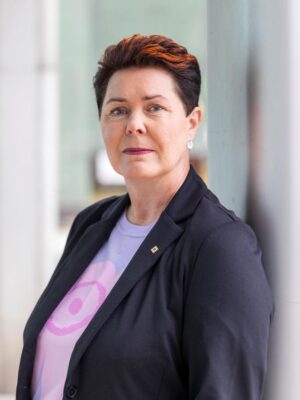
“A typical home care client suffers from memory disorders and requires significant assistance with all daily activities, yet the services provided do not meet their needs. The government must take THL’s findings seriously and secure resources instead of making budget cuts,” says SuPer’s President Päivi Inberg.
According to THL, only 52% of home care units were able to deliver the planned number of service hours in 2024. Regional disparities are stark: in Helsinki, only 11% of units met their service targets, compared with 86% in North Karelia. This violates the requirements of the Act on Care Services for Older Persons, as well as the Finnish Constitution, which guarantees equal access to services.
SuPer’s own reports on the state of home care in 2015, 2018, and 2022 have highlighted the constant time pressure faced by practical nurses and the extremely poor functional capacity of clients. Care workers feel that not all clients are safe in their homes and that they are unable to provide services in the best interest of the client.
Service promises are not enough – legal requirements must be clarified
Current legislation does not include a binding minimum staffing requirement for home care comparable to that of 24-hour service housing. Instead, the organisation and resourcing of home care is guided by a general legal requirement for adequate services. According to THL, a clear service promise is needed for home care. SuPer believes that the legal requirements must be clarified.
The law requires that older people receive the services their needs demand. A simple benchmark is whether the services required by the client’s needs can actually be delivered. If these criteria are not met, the level of service must be raised and resources increased accordingly.
“Services must meet people’s needs, and those needs must be defined through individual assessment. It is not enough that services merely exist, and access to services must not depend on one’s place of residence,” Inberg emphasises.
“To ensure that home care clients receive safe and appropriate services, the law must be clarified. Recently, we have seen how wellbeing services counties are cutting all non-statutory activities.”
Care poverty leads to exhaustion among families and care workers
Care poverty is a reality in Finland. According to Professor Teppo Kröger of the University of Jyväskylä, elderly care is underfunded by over one billion euros. The care crisis cannot be solved by reducing services, as the number of older people—and thus the need for care—is increasing.
THL’s report states that one in five family carers is exhausted, overburdened, or unable to continue providing care. Those caring for elderly people with memory disorders are particularly affected.
SuPer’s surveys also show that practical nurses—the largest professional group in home care—experience significant work-related stress. This leads to increased sick leave and concern for the wellbeing of clients. In turn, this raises substitute staffing costs and reduces the attractiveness of the profession.
SuPer demands that the government take immediate action to resolve the home care crisis. The right of older people to quality care and the right of care workers to a sustainable working life must not be sacrificed for the sake of budget cuts.
“Services must meet people’s needs, and those needs must be defined through individual assessment.”
– Päivi Inberg
Published in English 11.11.2025.
Further information